
When someone dies, there is no single way to say goodbye.
For some families, a traditional funeral feels right. For others, something more personal feels appropriate — a celebration of life, focused less on convention and more on the person themselves: their personality, relationships, stories and the things that made them who they were.
Despite the name, a celebration of life doesn’t have to be cheerful or upbeat. Grief and celebration can sit alongside each other. A farewell can hold the sadness of losing someone while still making space for laughter, memories and connection. For further information about grief and bereavement, Grief Australia offers independent resources and support.
The most meaningful farewell is usually the one that feels most like the person being remembered.
What is a celebration of life, and how is it different from a funeral?
A celebration of life is a personalised farewell that brings family and friends together to remember someone who has died. It can be religious or secular, formal or relaxed, intimate or large — with the coffin or ashes present, or held separately from the cremation or burial.
The word “celebration” can be a little misleading. It doesn’t mean putting on a happy face or avoiding the sadness of death. It simply means making room for the whole person and the life they lived — their sense of humour, the things they loved and the people who knew them best.
There is also a lot of overlap between the terms. A funeral is a ceremony held to mark someone’s death, while a celebration of life describes more of a style and focus than a separate type of event. A traditional funeral can absolutely be a celebration of life, just as a celebration of life can include many of the elements you’d expect from a traditional service.
The difference is usually one of emphasis — a more established structure, or more room for personal stories, photographs and family participation.
What we’ve seen work well
Every family is different, but a few things tend to stand out in the celebrations of life we’ve been part of.
There’s often no dress code. Families might ask guests to wear colour rather than black, or simply come as they are.
There’s often more space for friends and family to speak, rather than one person carrying the whole service. Candle lighting and note writing can give people a way to take part without needing to find the right words to say aloud.
And almost every gathering holds tears and laughter in the same room. A shared memory that gets someone crying one minute and laughing the next is often exactly what makes the day feel true to the person.
What happens at a celebration of life?
There is no standard order of service. A ceremony might include:
- A welcome and introduction
- A eulogy or life story
- Family or friends sharing memories
- Readings, poetry or letters
- Favourite music
- Photographs or videos
- Religious prayers or rituals
- Moments of reflection
- Candle lighting or other symbolic rituals
- Personal objects or memorabilia
- A final farewell
Some families prefer one person to tell the whole story; others invite several people to share a memory.
Often, it’s the smallest details that make a farewell memorable — a handwritten note beside a photograph, a favourite song playing as people arrive, or a candle lit by a grandchild.
Celebration of life ideas for a meaningful farewell
You don’t need a theme or to fill every moment with an activity. Start with the person: what did they love, what mattered to them, and what would their family and friends naturally remember?
Choose music that meant something to them
A favourite song, artist or piece of music connected to a particular period of their life can become part of the farewell — as people arrive, during a moment of reflection or at the close of the ceremony.
Tell their story through photographs
A slideshow, display or memory table can bring different parts of someone’s life into the room.
Don’t overlook the ordinary photographs. Holidays, pets, birthdays and funny moments can often say as much as the formal ones.
Invite people to share a memory
Rather than one formal eulogy, you might invite several people to share a short story.
Often, it’s the small, everyday things that people remember most.
Include something they loved
Gardening, cooking, fishing, books, art, sport, travel or time with grandchildren can all become part of a farewell.
It doesn’t need to be elaborate. Sometimes displaying an object or playing a particular piece of music is enough.
Give people a way to participate
A guest book, memory cards, handwritten notes, candle lighting or placing flowers can give people something to do when words are difficult.
These simple rituals can also become meaningful keepsakes for the family.
Choose a meaningful location
A funeral chapel, community venue, garden, private home or another place that mattered to the person can all work.
The best choice isn’t necessarily the most impressive one. It’s the one that feels right for the people who’ll be there.
How do you plan a celebration of life?
Planning can feel overwhelming, particularly when you’re grieving. It can help to work through the decisions one at a time.
Decide what kind of farewell feels right. It might be traditional, informal, religious, a celebration of life, or a combination.
Choose when and where people will gather. The ceremony can take place before or after a burial or cremation, or separately at a later date.
Decide who will lead the ceremony. This could be a celebrant, religious leader, funeral director, family member or friend.
Gather stories, photographs and music. Different people will remember different sides of a person’s life, so ask family and friends to contribute.
Decide how people will participate. Speakers, readings, music and rituals can all be included, but nobody should feel pressured to take part.
Bring everything together into a running order. Even an informal ceremony benefits from some structure so that the different elements flow naturally.
When is a celebration of life held?
A celebration of life can be held at almost any point after someone dies — before or alongside a funeral, immediately after a cremation, or weeks or months later as a memorial gathering.
Some families choose a private cremation first and hold a larger celebration afterwards. This can give them more time to bring family and friends together and decide how they want the farewell to look.
Can you have a celebration of life after cremation?
Yes. The ceremony can include the person’s ashes, or simply focus on bringing people together to remember them. The cremation and celebration don’t have to happen at the same time.
Where can you hold a celebration of life in Sydney?
There are many options for a celebration of life in Sydney, depending on the size of the gathering and the kind of farewell you want.
Families might choose a funeral chapel, community hall, private home, garden, park, restaurant or club. You could also choose somewhere that had particular significance to the person.
For families in the Inner West, Marrickville, the Eastern Suburbs and surrounding areas, there are many possibilities beyond a traditional funeral venue.
The location doesn’t need to be extraordinary. A familiar place can sometimes make the gathering feel more comfortable and personal.
Do you need a celebrant?
No. A family member, friend or religious leader can lead a celebration of life.
A funeral celebrant can, however, take some of the pressure away from the family. They can spend time getting to know the person through conversations with those who loved them, then shape those memories into a ceremony that tells their story.
They can also coordinate speakers, readings and music, write and deliver the ceremony, and guide everyone through the day.
You can learn more about celebration of life ceremonies with Idyllic Funerals.
Can a celebration of life be religious?
Yes. A celebration of life can include prayers, scripture, hymns, clergy and other religious traditions. It can also be entirely secular, or combine religious elements with personal stories and rituals.
The important thing is that the ceremony reflects the beliefs and wishes of the person and their family.
How long does a celebration of life last?
There is no set length. Around 30 to 60 minutes is common for a formal ceremony, although it can be shorter or longer depending on what’s included.
The number of speakers, readings, music and rituals will all affect the length.
Is a celebration of life cheaper than a traditional funeral?
Not necessarily.
The cost comes down to what’s included rather than what the ceremony is called. Depending on the arrangements, this might include the cremation or burial, venue, celebrant, flowers, transport, catering and other elements.
Our funeral pricing guide explains what’s typically involved.
A simple cremation followed by a small gathering can cost less than a traditional funeral, while a larger celebration with a hired venue and catering can cost more.
There is no formula for a meaningful farewell
For one family, a celebration of life might mean a chapel filled with photographs and their loved one’s favourite music.
For another, it might be a small gathering in a garden with a handful of people sharing stories.
It might include laughter, tears, or both.
What matters is that the farewell feels like the person you’re remembering.
If you’re planning ahead or need guidance on the day, get in touch with Matt — he’s always happy to talk through what might feel right for your family.
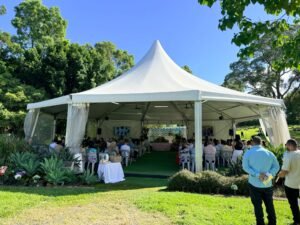
Waterway Chapel, Rookwood