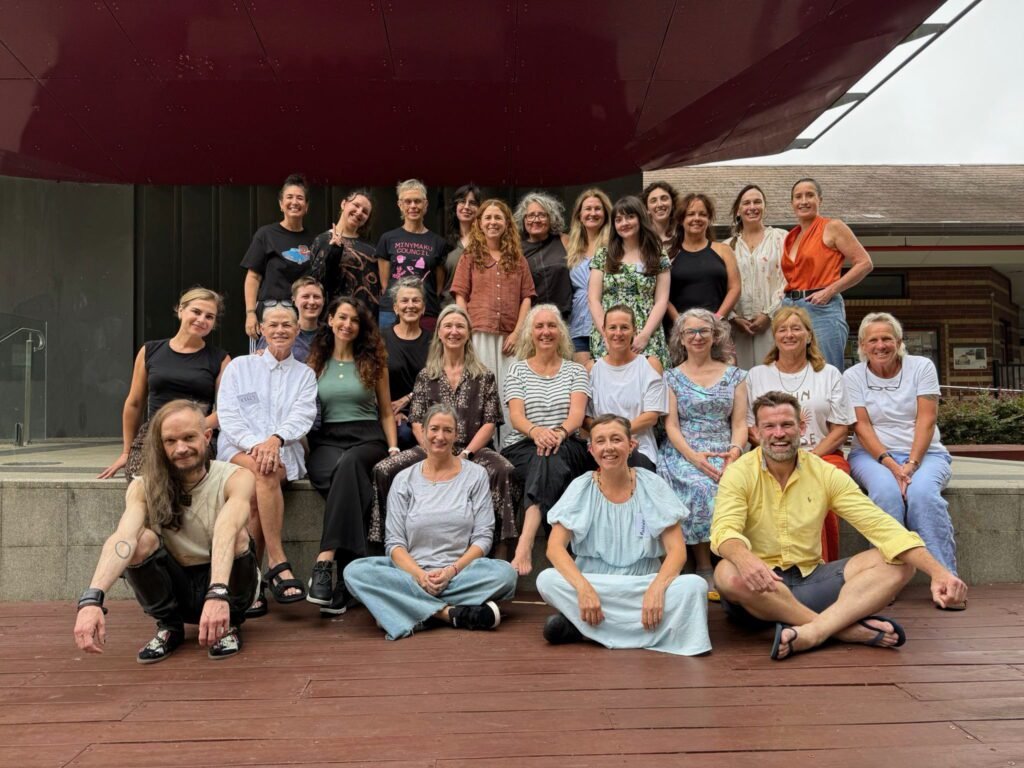
A couple of weeks ago, I completed Death Walker training with Zenith Virago from the National Death Care Centre while she was in Sydney.
Zenith has been working in the death care space for more than 30 years. She has been recognised multiple times, including being named Byron Bay Citizen of the Year, and has long advocated for bringing dignity, humanity and choice back into conversations around dying. Her TEDx talk on dying is well worth listening to. She has a way of slowing things down and placing the human being back at the centre of the experience.
In many medical settings, even with the very best intentions, processes can become clinical and time-driven. Zenith’s work gently reminds us that death is not just a medical event. It is a profound human transition.
The three days of training explored what is possible before, during and after death, not only from a logistical perspective, but from a deeply personal one.
Interestingly, I was the only practising funeral director in a room of 26 participants. There were people who worked within funeral homes and related services, alongside carers, community members and health professionals, but no other funeral directors. That meant there were plenty of questions directed my way, and it was a privilege to offer practical insight while also learning from others’ perspectives.
Even after some time in this profession, there is always more to learn.
Experiencing Death Walker Training in Practice
One of the most moving parts of the training was experiencing a shrouding ceremony.
Each of us, in turn, lay down on a large sheet. We were gently wrapped, held and softly rocked by the group. It was quiet, respectful and unexpectedly emotional. Many people were brought to tears – not from sadness, but from the tenderness of the experience.
Being wrapped in a simple sheet rather than placed in a coffin shifts your understanding of what is possible. It strips things back to something very human. It reminds you that death care does not have to be complicated or clinical – it can be simple, intimate and grounded in touch and presence. For me, stepping into that experience personally, rather than professionally, was powerful.
There Is Often More Choice Than People Realise
A central theme of the Death Walker training was this: families often have more options than they think.
For example, many people are surprised to learn that in the right circumstances, you can keep a person at home for up to five days after death, supported by a cooling plate. There is no automatic rush to transfer someone to a mortuary.
Families may choose to:
- Spend additional time sitting with the person who has died
- Wash and dress them themselves
- Invite close friends or family to say goodbye in familiar surroundings
- Move at a pace that feels emotionally right
Of course, every situation is different, and practical considerations need to be assessed carefully. But understanding that there is space, legally and practically, can be deeply reassuring. Knowledge removes unnecessary fear.
Putting Your Affairs in Order
Another important thread throughout the training was preparation.
Understanding what is possible after death is empowering. But equally important is ensuring your paperwork is in order before that time comes.
Having a valid Will, an Advance Health Care Directive (AHCD), and appropriate Power of Attorney and Enduring Guardianship arrangements in place can make an enormous difference to those you leave behind.
These documents:
- Clarify your wishes
- Reduce confusion or conflict
- Allow trusted people to make decisions on your behalf
- Ease emotional and administrative pressure during an already difficult time
So much of stress around death comes not from the event itself, but from uncertainty. Clear documentation provides guidance and reassurance.
It does not need to be complicated or urgent. But taking the time to put these foundations in place is one of the most practical acts of care you can offer your family.
Continuing to Learn
The funeral industry can be traditional and medical systems can be fast-moving. But at the centre of it all is something very simple: people.
Zenith’s work reinforces something I value deeply in my own role; slowing down, listening, and meeting people where they are. Whether families choose a traditional funeral, home-based care, or something in between, my role is to hold space calmly and respectfully for whatever is needed in that moment.
Completing this Death Walker training was not about changing the way I work, it was about deepening it. This work continues to evolve and I am grateful to keep learning.